Filler migration: what actually causes it, and how to avoid it
Migration is not bad luck and it is not the product. It is volume, plane and timing — three things entirely under the injector's control.
 Alla Yusim, RN, MSN, FNPAesthetic medicine · 7819 Bay Parkway, Brooklyn, NY 11214
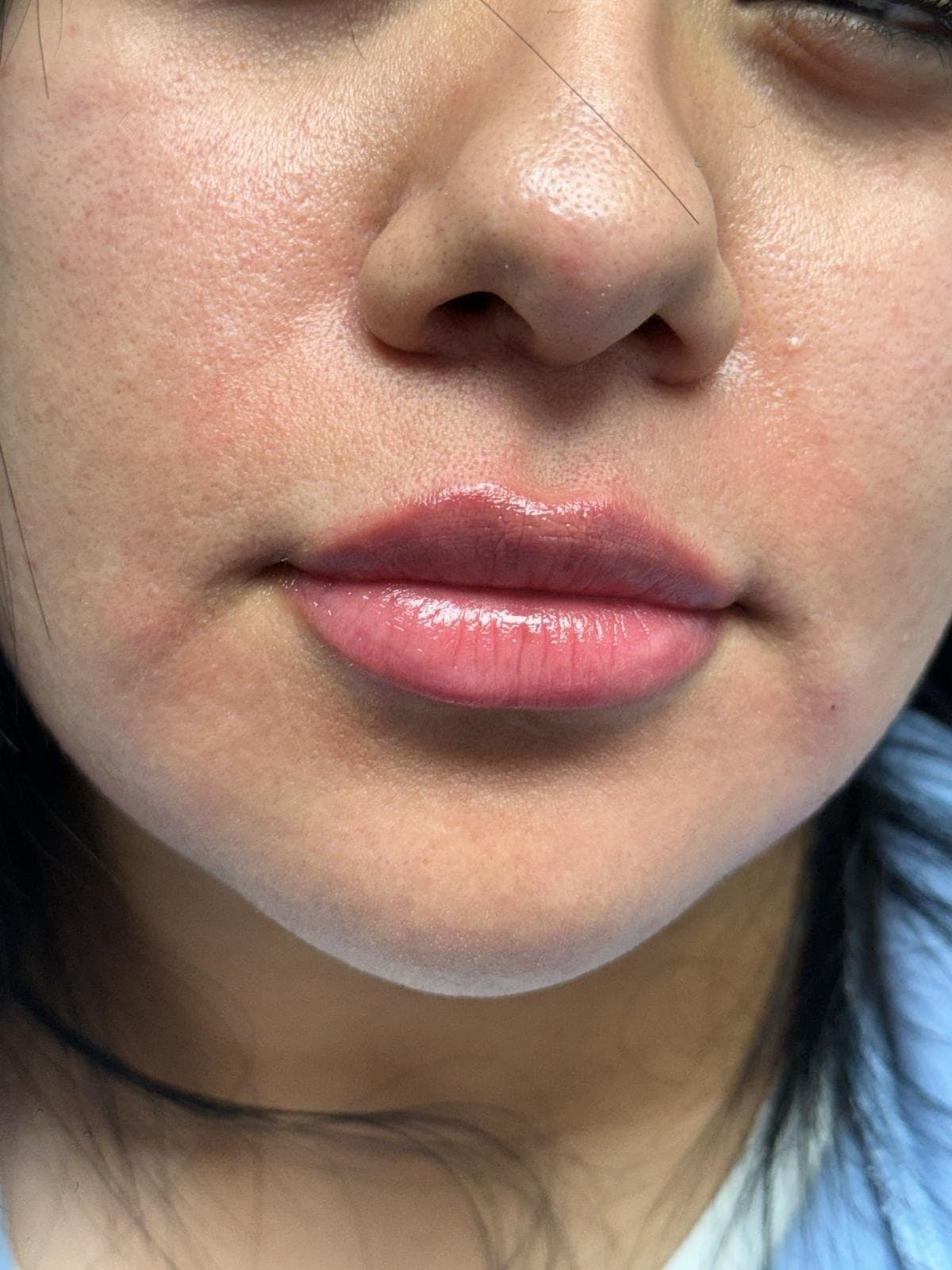
Migration is when filler ends up somewhere it was not placed — most visibly as a shelf or shadow above the upper lip border, or as puffiness spreading under the eye. It is the fear that keeps a lot of sensible people away from injectables entirely, and it is largely preventable.
The three real causes
1. Too much product
Tissue holds a finite volume. Past that point, product has nowhere to go but outward along the path of least resistance. This is the leading cause by a wide margin, and it is usually the result of stacking sessions before the previous one has settled.
2. The wrong plane
Filler placed too superficially has very little holding it in position. Correct depth varies by area — deep and on bone for structure at the cheek and jaw, precisely within the vermillion body for lips. Depth is a decision, and getting it wrong shows up months later.
3. Topping up too soon
Filler does not vanish on a schedule; it degrades gradually. Adding a full syringe at six months when half the previous one is still present means the tissue now holds more than it was ever assessed for. Sessions spaced honestly, with an assessment each time, prevent this.
Swelling or migration?
| Swelling | Migration | |
|---|---|---|
| When it appears | Immediately, days 1–3 | Weeks to months later |
| How it behaves | Settles steadily | Stays, or slowly worsens |
| Where it sits | Where product was placed | Above the border, or spreading outward |
| To touch | Diffuse, tender | Firm, defined edge |
Nothing should be judged before two weeks. A great deal of what gets posted online as migration on day four is ordinary swelling that resolved by day ten.
If it has already happened
Hyaluronidase dissolves HA filler, including migrated product. The usual approach is to dissolve fully, allow two to four weeks for the tissue to settle, and then reassess from scratch — treating on top of migrated filler tends to compound the original problem rather than correct it.
How it is avoided here
- HA products only in the lips, so everything remains reversible
- A cannula wherever anatomy allows — fewer entry points, less trauma, less tracking
- Half a syringe as the default first treatment, with a review at two weeks
- No top-up before the previous session has been properly assessed
- An honest refusal when someone asks for more than the tissue should hold
Common questions
Does migrated filler go away on its own?
Eventually — HA is broken down by the body — but it can take a year or longer, and it will look wrong throughout. Dissolving is faster and more predictable.
Is dissolving safe?
Hyaluronidase has been used for decades and is well tolerated. It is not selective, so it removes the filler you wanted to keep as well; that is why full dissolve and restart is the usual plan rather than spot correction.
Can I get filler again afterwards?
Yes. Wait two to four weeks after dissolving so the tissue settles and can be assessed honestly, then start conservatively.
Does a cannula guarantee no migration?
No. A cannula reduces trauma and bruising and lowers the risk of intravascular injection, but volume and plane are still what determine whether product stays where it was placed.
This guide is general information, not medical advice, and does not replace an in-person assessment. Treatments described are performed by Alla Yusim, RN, MSN, FNP at Skin in Focus LLC, 7819 Bay Parkway, Brooklyn, NY 11214.
Ask Alla Yusim directly.
A consultation is thirty minutes, complimentary for new clients, and ends with a plan and a price — not a package you did not ask for.